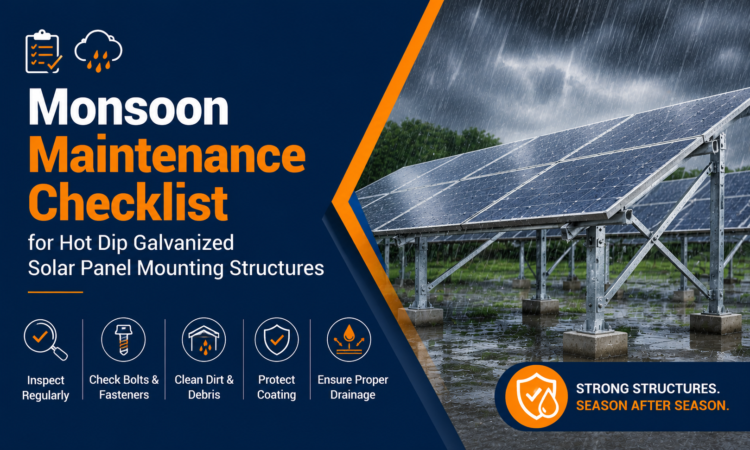
India’s solar energy sector is growing rapidly, with utility-scale solar parks, rooftop installations, and industrial solar projects becoming increasingly common.
However, the arrival of the monsoon season brings unique challenges for every solar panel mounting structure. Heavy rainfall, strong winds, water accumulation, humidity, and lightning can affect both the performance and longevity of solar infrastructure if proper maintenance is not carried out.
At Parco Engineers, we understand that well-maintained hot-dip galvanized steel structures are essential for ensuring the long-term reliability of solar projects. A structured maintenance approach before, during, and after the monsoon season helps prevent costly repairs, reduces downtime, and maximises energy generation.
Why Is a Monsoon Maintenance Checklist Important for Solar Structures?
A Monsoon maintenance checklist for solar panel mounting structures helps identify structural issues, loose fasteners, drainage problems, corrosion risks, and electrical safety concerns before they become major failures. Regular inspections ensure that solar mounting structures remain safe, stable, and efficient throughout the rainy season while protecting long-term investment in solar installations.
Why Monsoon Maintenance Matters for Solar Installations
Solar structures are designed to withstand environmental exposure, but monsoon conditions create additional stress on infrastructure.
Common challenges include:
- High wind loads
- Water seepage
- Soil erosion near foundations
- Moisture-related electrical issues
- Increased risk of corrosion
- Animal and pest intrusion
While hot dip galvanization provides excellent corrosion resistance, regular inspections remain critical for maintaining structural integrity and operational performance.
Typical Risks During Monsoon Season
| Risk Factor | Potential Impact |
| Heavy Rainfall | Water pooling and foundation weakening |
| High Winds | Loose fasteners and structural stress |
| Humidity | Accelerated corrosion in damaged areas |
| Lightning | Electrical system damage |
| Pests | Cable damage and safety hazards |
Pre-Monsoon Inspection Checklist (Complete Before June)
Preparing before the rainy season is the most effective way to prevent monsoon-related issues.
Full Inspection of the Structure
Conduct a comprehensive visual inspection of the entire solar panel mounting structure.
Look for:
- Bent members
- Structural deformation
- Foundation settlement
- Loose bracing components
- Signs of mechanical damage
Special attention should be given to high-load areas that experience continuous wind pressure.
What to Check
- Main support members
- Cross-bracing elements
- Foundation connections
- Structural alignment
- Module mounting points
Torque Check All Fasteners
Fasteners naturally loosen over time due to thermal expansion, vibration, and environmental exposure.
Perform a torque verification on:
- Bolts
- Nuts
- Clamps
- Rail connections
A documented torque check is a key part of any professional solar structure inspection checklist.
Check Roof Penetration Points and Waterproofing
For rooftop projects, inspect all roof penetration points carefully.
Check for:
- Damaged sealants
- Water leakage signs
- Cracked waterproof membranes
- Corrosion around mounting points
Preventing water ingress protects both the building and the solar system.
Inspect Earthing and Bonding Connections
Lightning activity increases significantly during monsoon seasons.
Verify:
- Earthing continuity
- Grounding resistance values
- Bonding connections
- Lightning protection systems
Proper grounding ensures safety and compliance with electrical standards.
Check for Animal and Pest Activity
Birds, rodents, and insects often seek shelter beneath solar panels.
Inspect:
- Cable trays
- Junction boxes
- Conduits
- Mounting cavities
Addressing pest activity early helps avoid cable damage and unexpected downtime.
During-Monsoon Monitoring Checklist
Preventive maintenance should continue throughout the rainy season.
After Every Major Storm or High-Wind Event
Conduct immediate inspections after severe weather.
Look for:
- Loose modules
- Bent structural members
- Fastener displacement
- Foundation movement
Even hot dip galvanized steel structures require periodic verification after extreme weather conditions.
Monitor for Water Pooling and Drainage
Poor drainage can weaken foundations and create long-term structural concerns.
Inspect:
- Ground-mounted foundations
- Drainage channels
- Water flow paths
- Roof drainage systems
Prompt action can prevent future structural deterioration.
Generation Data Monitoring for Anomalies
Electrical performance often provides early warning signs of problems.
Monitor:
- Daily energy generation
- String performance
- Inverter output
- Sudden efficiency drops
Unexpected variations may indicate structural movement, shading issues, or electrical faults.
Post-Monsoon Checklist (September – October)
Once the monsoon season ends, perform a comprehensive system review.
Full Re-Torque of All Fasteners
Wind and vibration during monsoon months can affect fastener integrity.
Re-torque:
- Module clamps
- Structural bolts
- Rail connections
- Foundation anchors
Document all maintenance activities for future reference.
Corrosion Treatment and Structural Member Replacement Where Needed
Although hot dip galvanization provides excellent protection, any damaged areas should be repaired promptly.
Inspect for:
- Mechanical coating damage
- Surface rust
- Galvanized layer deterioration
- Impact-related defects
If structural members are compromised, replacement may be necessary.
At Parco Engineers, advanced galvanization processes help deliver long-lasting protection for solar infrastructure operating in challenging environments.
Cable and Conduit Post-Season Inspection
Inspect all electrical pathways after monsoon exposure.
Check:
- UV degradation
- Water ingress
- Conduit damage
- Connector integrity
Maintaining electrical reliability is as important as maintaining structural integrity.
AMC Review and Documentation Update
A preventive maintenance strategy should include accurate records.
Update:
- Inspection reports
- Torque logs
- Repair history
- Performance records
- Asset condition assessments
Proper documentation supports warranty compliance and long-term asset management.
Why Hot Dip Galvanized Steel Structures Are Preferred for Solar Projects
Modern solar installations increasingly use hot dip galvanized steel structures because of their proven performance in outdoor environments.
Key Benefits
- Superior corrosion resistance
- Long service life
- Minimal maintenance
- Excellent structural strength
- Lower lifecycle costs
Industry studies indicate that properly galvanized structures can provide corrosion protection for several decades, depending on environmental conditions.
Conclusion
A well-planned Monsoon maintenance checklist for solar panel mounting structures is essential to protecting solar assets, maximising energy production, and extending infrastructure lifespan. By following systematic pre-monsoon inspections, during-monsoon monitoring, and post-monsoon maintenance activities, asset owners can significantly reduce operational risks.
Combined with the durability of hot dip galvanized steel structures, proactive maintenance ensures that solar mounting structures continue delivering reliable performance season after season.
Frequently Asked Questions
Why is a monsoon maintenance checklist important for solar structures?
It helps identify structural, drainage, and electrical issues before they lead to costly repairs or system downtime.
How often should solar mounting structures be inspected during the monsoon?
Inspections should be performed before monsoon, after major storms, and once the season ends.
Does hot dip galvanization eliminate corrosion completely?
Hot dip galvanization provides exceptional corrosion resistance, but periodic inspections are still recommended to identify mechanical damage or unusual exposure conditions.
What is the most critical pre-monsoon inspection task?
Full structural inspection and fastener torque verification are among the most important maintenance activities.
Can water pooling affect solar mounting structures?
Yes. Poor drainage can weaken foundations, increase structural stress, and create long-term stability issues.
Why are hot dip galvanized steel structures preferred for solar projects?
They offer long-term corrosion protection, durability, and lower maintenance requirements compared to untreated steel structures.