
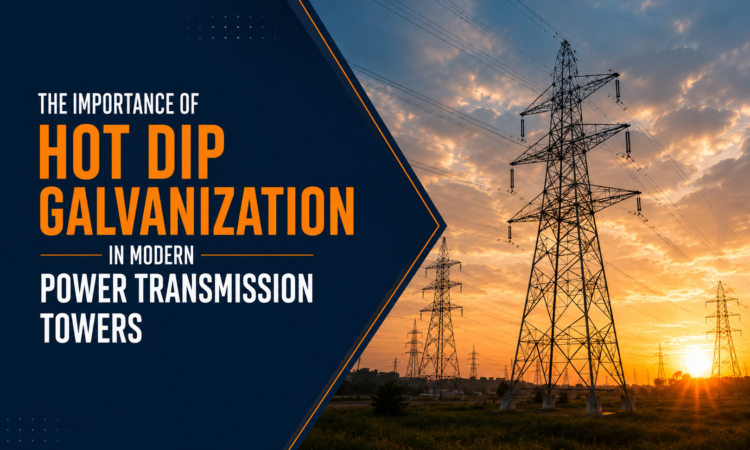
The Importance of Hot Dip Galvanization in Modern Power Transmission Towers
The fast-paced construction of energy grid networks and infrastructure has created a great need for robust and durable electrical towers all over the world. These towers provide a framework for today’s electricity transmission systems. Due to their continuous operation in outdoor settings, these towers are frequently subjected to moisture, pollution, variable temperatures, and harsh climatic conditions.
To preserve the structural integrity of these towers and ensure that the electricity flow is uninterrupted, it is necessary that corrosion resistance be guaranteed in power transmission towers. In such circumstances, Galvanization becomes highly important. Out of many anti-corrosive techniques available today, hot dip galvanization has emerged as one of the most efficient and economical processes for preventing corrosion of steel structures employed in electrical transmission systems. The process helps improve the lifespan, durability, and overall performance of steel components, making it an essential part of modern infrastructure development.
The Role of Electrical Towers in Modern Infrastructure
Electrical Towers play an essential role in transmitting high-voltage electrical power across long distances. They enable effective delivery of electricity between different points, including power production plants, power stations, industrial zones, and residential areas. As demands for electricity rise, these towers become even more essential.
It is common practice to utilize steel in the fabrication of power transmission towers due to their strong resistance and ability to bear load. Nevertheless, untreated steel tends to be highly susceptible to corrosion when exposed to harsh weather conditions.
Over time, corrosion can weaken structural stability and increase maintenance requirements. This may impact negatively on the effectiveness of the electricity transmission process. Therefore, industries use hot dip galvanization to protect their towers from such effects. Parco Engineers delivers advanced galvanized steel solutions designed for demanding infrastructure and utility applications requiring durability and corrosion resistance.
Why Hot Dip Galvanization Is Important for Transmission Towers
Transmission towers are continuously exposed to harsh environmental conditions such as rain, humidity, industrial pollution, saline air, and temperature fluctuations. Without proper protection, steel structures can corrode rapidly, weakening the tower’s structural integrity and increasing operational risks.
The hot dip galvanizing process provides a protective zinc coating over steel components by immersing them into molten zinc. This process creates a durable metallurgical bond between zinc and steel, forming a strong barrier against corrosion.
This protective layer acts as both a physical shield and a sacrificial coating. Even if the surface gets scratched, the zinc continues protecting the underlying steel from rust formation. This makes Galvanization one of the most reliable methods for extending the life of galvanized tower structures used in critical infrastructure projects.
In modern electricity transmission systems, reliability is not negotiable. A corroded tower can lead to structural failures, power outages, and costly repairs. Therefore, hot dip galvanization plays a major role in maintaining uninterrupted power distribution.
Benefits and Lifespan of Galvanized Power Transmission Towers
At Parco Engineers, hot dip galvanization is used to manufacture durable and reliable Power Transmission Towers designed for long term performance.
Key Benefits of Galvanized Towers
- Superior Corrosion Resistance
The zinc coating protects steel from moisture, oxygen, and pollutants, preventing rust and corrosion - Long Lasting Durability
Hot dip galvanized towers can withstand harsh environmental conditions and physical stress for decades. - Low Maintenance Requirements
Galvanized structures require minimal repairs, repainting, and inspections, helping reduce maintenance costs. - Improved Reliability and Safety
The protective coating helps maintain structural strength and ensures reliable power transmission over time. - Ideal for Harsh Environments
Suitable for coastal, industrial, and high humidity regions where corrosion levels are higher.
Corrosion Protection in Electrical Transmission Towers
Corrosion is one of the biggest threats to steel-based transmission infrastructure. When exposed steel reacts with oxygen and moisture, rust forms and gradually weakens the structure. Over time, this can reduce the load-bearing capacity of towers and create safety hazards.
The galvanizing corrosion protection mechanism works differently from conventional coatings. Instead of merely covering the surface, the zinc coating chemically bonds with steel and provides cathodic protection.
This means the zinc corrodes first before the steel underneath becomes affected. As a result, galvanized towers continue to remain protected even if minor surface damage occurs.
For modern power transmission towers, this level of corrosion protection is highly valuable because these structures are expected to perform continuously under demanding environmental conditions.
Additionally, the uniform coating achieved through the hot dip galvanizing process ensures that even hard-to-reach areas, joints, edges, and corners receive complete protection. This comprehensive coverage improves the overall reliability and durability of the structure.
How Galvanization Extends Tower Life
The ability of hot dip galvanizing to extend tower life lies in its multi-layered protection system. The zinc coating acts as a barrier while also offering electrochemical protection against corrosion.
Here’s how galvanization increases the lifespan of transmission towers:
Prevents Rust Formation
The zinc layer isolates steel from moisture and atmospheric contaminants, reducing the risk of rust and oxidation.
Provides Sacrificial Protection
Even if the coating gets damaged, surrounding zinc continues protecting exposed steel through sacrificial action.
Improves Mechanical Durability
Galvanized coatings are resistant to abrasion, impact, and environmental wear, helping maintain the tower’s structural strength over time.
Reduces Environmental Damage
Galvanized steel performs exceptionally well in challenging climates, including coastal, high-humidity, and industrial regions.
Supports Sustainable Infrastructure
Long lasting steel structures reduce the need for frequent material replacement, supporting environmentally responsible infrastructure development.
Because of these advantages, galvanized HDG Electrical Towers continue to play a vital role in strengthening modern power distribution networks worldwide.
Applications of Parco’s Galvanized Steel Products in Modern Transmission Tower Engineering
In modern power transmission projects, hot dip galvanized steel products play a crucial role in ensuring structural strength, corrosion resistance, and long term reliability. At Parco Engineers, a wide range of galvanized steel components are used in Power Transmission Towers and utility infrastructure to deliver dependable performance in demanding environments
GI Angle
GI Angles are widely used as primary structural members in transmission towers. They provide excellent strength and stability to the overall framework. These sections are commonly used in:
Applications
- Main Tower Legs – Provide primary structural support and stability to transmission towers
- Bracing Members – Strengthen the tower framework against wind and dynamic loads
- Cross Arms – Support conductors and insulators at required clearances.
- Support Frames – Used in equipment and utility support structures.
GI Channels
GI Channels are important for supporting electrical and utility equipment within substations and transmission systems.
Applications
- Equipment Mounting Frames – Support electrical panels, switchgear, and utility equipment.
- Cable Tray Supports – Provide stable routing systems for power and control cables.
- Substation Structures – Used in structural assemblies and equipment support systems.
GI Flats
GI Flats are essential components in grounding and reinforcement applications. They help improve electrical safety and structural stability in power infrastructure projects.
Applications
- Earthing Systems – Provide safe dissipation of fault current into the ground.
- Bracing Connections – Used for joining and reinforcing structural members.
- Support Clamps – Fabricated into clamps and fastening accessories.
- Electrical Grounding Networks – Form part of complete grounding and bonding systems
GI Beams
GI Beams are used in heavy duty structural applications where high load bearing capacity is required. These are commonly used in:
Applications
- Transformer Support Structures – Provide strong foundations for transformers and heavy machinery
- Utility Building Frameworks – Used in control rooms and utility infrastructure construction.
GI Plates
GI Plates provide strong and secure connections to tower and equipment installations. Their applications include:
Applications
- Base Plates for Tower Foundations – Connect tower legs securely to concrete foundations.
- Mounting Plates – Used for fixing electrical equipment and structural components.
- Reinforcement Sections – Strengthen joints, supports, and structural assemblies.
The use of hot dip galvanized steel products helps improve durability, reduce maintenance requirements, and enhance the long-term performance of modern power transmission infrastructure.
Conclusion
As global demand for reliable electricity infrastructure continues to grow, the importance of durable and corrosion-resistant transmission systems becomes increasingly significant. Hot dip galvanization has emerged as one of the most effective solutions for protecting Electrical Towers and Transmission Towers against environmental damage and long-term wear.
From superior corrosion resistance and reduced maintenance to enhanced safety and longer lifespan, galvanized steel towers offer numerous advantages for modern electricity transmission systems. The durability and reliability of galvanized tower structures make them essential for building sustainable and cost-effective power infrastructure.
By investing in high-quality HDG Electrical Towers, utility providers and infrastructure developers can ensure stronger performance, lower operational costs, and long-term protection for critical power transmission networks.
FAQs
What is hot dip galvanization in electrical towers?
Hot dip galvanization is a process where steel tower components are immersed in molten zinc to create a protective coating. This zinc layer protects Electrical Towers from corrosion, rust, and environmental damage, helping improve durability and long-term performance.
Why are galvanized Electrical Towers preferred for power transmission?
Galvanized Electrical Towers offer superior corrosion resistance, longer service life, and lower maintenance requirements. These advantages make them highly reliable for supporting modern electricity transmission systems in harsh environmental conditions.
How does galvanization protect transmission towers from corrosion?
Galvanization creates a zinc coating that acts as a protective barrier against moisture, oxygen, and pollutants. The coating also provides sacrificial protection, meaning the zinc corrodes before the steel underneath becomes damaged.
What are the benefits of galvanized steel Electrical towers?
Galvanized steel Electrical towers provide excellent durability, corrosion protection, structural strength, and cost efficiency. They also reduce maintenance costs and improve the reliability of electrical transmission infrastructure.
Are hot dip galvanized towers suitable for coastal areas?
Yes, hot dip galvanized towers are highly suitable for coastal environments because the zinc coating offers strong resistance against humidity and salt exposure, which are major causes of steel corrosion.
How does hot dip galvanizing extend tower life?
The hot dip galvanizing process forms a durable zinc-iron alloy coating that protects steel from environmental damage. This helps prevent rust formation, reduces wear, and significantly extends the lifespan of tower structures.
2 Replies to “The Importance of Hot Dip Galvanization in Modern Power Transmission Towers ”
Comments are closed.