Why Hot-Dip Galvanized Steel is Essential for Electrical Infrastructure
Electrical infrastructures are critical in modern industries, buildings, and utilities. From electrical substations to commercial buildings, electrical infrastructures require support structures that are resistant to harsh environment conditions to provide long-lasting reliability. Among all materials used in electrical infrastructures, hot dip galvanized steel is one of the most trusted materials used by electrical contractors. This article is a guide for electrical contractors to know why hot dip galvanized steel is widely used in electrical infrastructures and how it benefits them in electrical projects.
Understanding the Galvanization Process
The galvanization process is a protective coating process for steel materials. This process protects steel materials against corrosion. During the galvanization process, the steel materials are dipped in molten zinc, and the surface of the materials is coated with galvanized zinc. This process is referred to as the hot dip galvanizing process. This makes the materials suitable for use in power plants, substations, and outdoor electrical installations.
Importance of Galvanized Steel in Electrical Infrastructure
Electrical infrastructures are mostly erected in outdoor environments where they are subjected to rain, humidity, temperature fluctuations, and environmental pollutants. This could cause corrosion of electrical infrastructures in a very short time unless appropriate measures are not taken to protect them from corrosion.
The use of hot dip galvanized steel ensures that electrical infrastructures are not only strong but also durable for a long time. This is the main reason GI steel is used in electrical infrastructures like power distribution, electrical substations, and industrial electrical projects.
For electrical contractors, using galvanized steel for electrical contractors is beneficial in several ways:
- Corrosion resistance is high
- Long-lasting electrical infrastructures
- Maintenance is low
- Structural reliability is high
Due to all these benefits, GI structures for electrical projects are considered a standard in electrical infrastructures.
Galvanized Structures for Substations
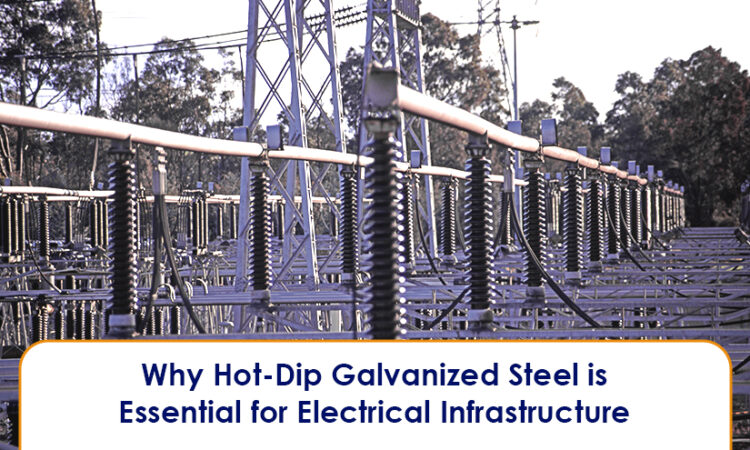
Substations are an integral part of the electric transmission and distribution system. They need structures to support equipment, cable management systems, and other electric equipment.
The use of galvanized structures for substations helps to provide the necessary strength to support equipment while resisting corrosion caused by exposure to the environment. This hot dip galvanized structure is designed to last for many decades with little or no maintenance.
The use of GI steel structures for substations helps to provide stability and safety, which are necessary for the operation of electric equipment.
Role of Cable Tray Systems in Electrical Projects
The management of cables is of great importance in ensuring that electrical projects are well organized. In this, cable tray system plays a crucial role in ensuring that cables are well organized in electrical projects. The steel cable trays are made of galvanized steel, which is durable and strong. The cable trays used in electrical projects are:
GI perforated cable tray – GI perforated cable trays are used to support, organize, and route electrical, data, and instrumentation cables in commercial and industrial settings. Their perforated design offers crucial ventilation for heat dissipation, prevents water accumulation, and allows for easy cable fastening.
Ladder cable tray – This cable tray is used for cable routing purposes, especially for heavy cables.
A well-constructed ladder cable tray or GI ladder type cable tray ensures that cables are well maintained and that there is sufficient air circulation to prevent cable overheating, which could be a source of electrical hazards in electrical projects.
The cable trays are exposed to environmental risks, and therefore, using hot dip galvanized steel for cable trays helps to prevent rusting of cable trays.
Grounding and Earthing Components
Grounding is an essential component for electrical installations. It helps to protect both electrical installation and human life from electrical fault conditions.
Grounding components such as grounding rods and GI earthing rods are used for electrical infrastructure to safely discharge electrical currents to the ground. These components are often manufactured using galvanized steel to prevent corrosion.
Using hot-dip galvanized earthing rods ensures that the components are effective even in soils prone to corrosion.
GI Earthing Flats
GI earthing flats are commonly used in electrical grounding systems to safely conduct fault currents into the earth. GI flats offer excellent corrosion resistance and long service life even in harsh soil conditions. Their strong galvanized coating ensures reliable conductivity and durability, making them a dependable choice for electrical infrastructure, substations, and industrial installations
GI Earthing Plates
GI earthing plates play an important role in effective grounding systems for electrical projects. Manufactured using hot dip galvanizing, these plates are designed to withstand moisture, chemicals, and underground conditions without rusting. The galvanized zinc coating provides long-term protection, ensuring consistent performance and safety in substations, power distribution networks, and other critical electrical installations
GI Base Plates
GI base plates are essential structural components used to support and anchor GI steel structures in electrical installations. Made from hot dip galvanized steel, these plates provide strong load-bearing support while resisting corrosion in outdoor environments. Their durable galvanized coating ensures stability and reliability, making them ideal for galvanized structures for substations, transmission towers, and other electrical infrastructure applications
Galvanized Steel vs Painted Steel
There are a number of contractors who compare galvanized steel vs painted steel before using them for electrical projects.
The main difference between both is that steel coated with paint is not a protective coating, and there are chances that it may peel off after a certain period of time. Once the paint is damaged, steel is exposed to corrosion.
On the other hand, steel coated with zinc using a hot dip galvanizing method is a much stronger and more durable option.
The main advantages of using hot dip galvanized steel are:
- Corrosion resistance is high
- Long-lasting
- Maintenance is low
- Durability is high
This is a much stronger option for electrical projects.
Lifecycle Cost of Galvanized Steel
While undertaking any electric infrastructure project, contractors must consider not only the initial costs but also the costs involved in the long-term maintenance of the structures.
The lifecycle costs of using galvanized steel are much lower compared to other materials. Though the initial costs may be slightly higher, the long-term benefits of maintenance, longevity, and durability of the structures are much greater.
The low maintenance costs of GI steel structures, coupled with their long lifespan, help contractors save costs on repairs, which are few and far between.
Conclusion
Reliable materials are essential for building safe and durable electrical infrastructure. Hot-dip galvanized steel has proven to be one of the most dependable materials used in electrical construction.
From galvanized structures for substation works and GI structures for electrical installations to cable tray systems, grounding rods, and earthing rods, galvanized steel plays a crucial role in ensuring strength, durability, and long-term performance.
For electrical contractors, choosing galvanized steel is a smart long-term investment. Trusted manufacturers such as Parco Engineers are recognized as reliable players in the industry, delivering high-quality galvanized solutions for electrical applications.
As electrical infrastructure continues to expand and evolve, the use of hot-dip galvanized steel structures will remain vital in building reliable, efficient, and long-lasting systems.